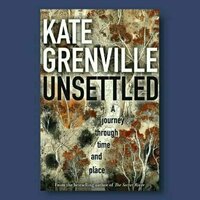


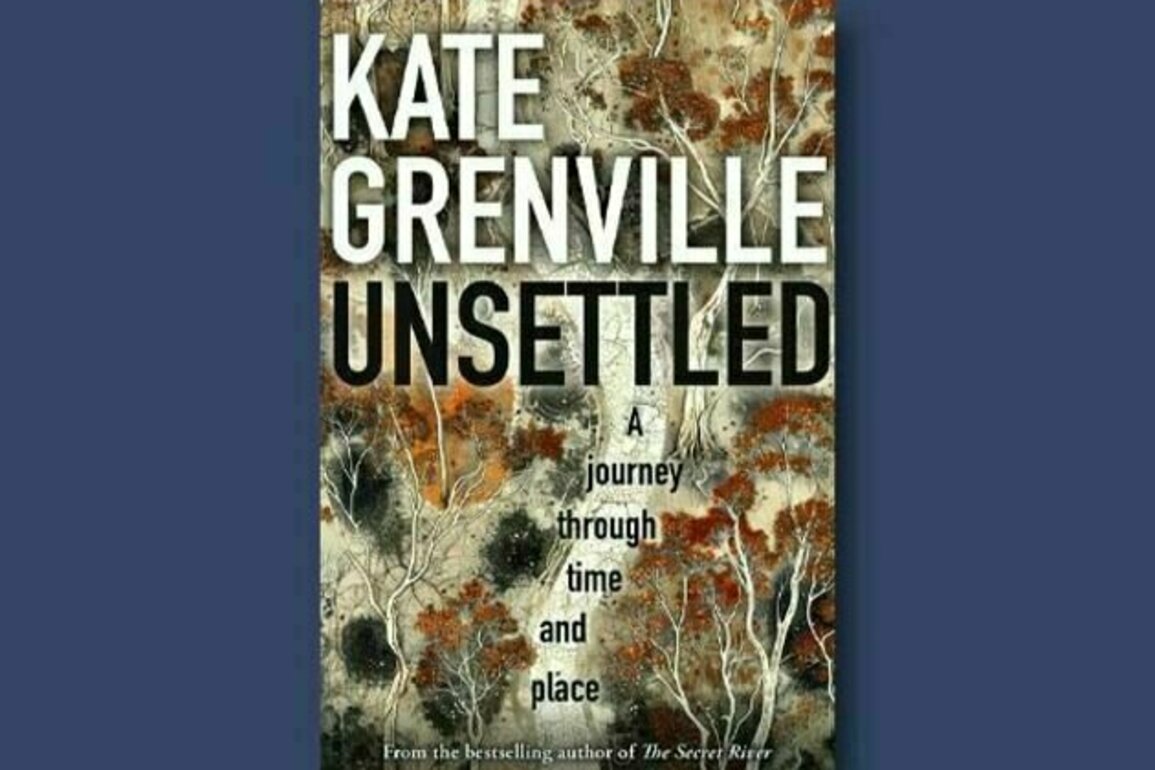
Kate Grenville retraces her ancestors colonial paths across Australia, confronting the legacy of dispossession and exploring what it means to live on stolen land.Jim Kablereviews her new bestseller, Unsettled.
IN MAY 2022, I came across an article by journalistSteve Dowwriting forThe Guardianwith specific reference to theMyall Creek Massacreof 10 June 1838 a site lying north of Bingara towards Inverell in northern NSW.
Steve made mention of Kelvin Brown, a senior Gomeroi man with an involvement with the Myall Creek Massacre Memorial, a place I first visited around the year 2000 on a visit back from Japan, where I was then teaching. I knew the name Kelvin Brown hed been a student of mine at Macintyre High School in the mid-1970s. I searched online and found him interviewed by a womens group. What a story he had to tell. And yes, it was my Kelvin.
I found a site for Kelvin and wrote him a letter of reconnection. And the following morning, a phone call came. Two hours went by in a flash. He was on the National Committee of theMyall Creek Massacre Memorial. Ill have to come up and visit you, I said.
The annual gathering for the Myall Creek Massacre Memorial March was to coincide with the anniversary just a week or two later, led by Kelvin. Later, I saw photographs of many hundreds in attendance, when accommodation far and wide was booked out. But I was able to do so the following week when Kelvin indicated he would be free. And did so.
Nku Dhruk: The Bark Petitions tells an important piece of Indigenous historyA new book by acclaimed author Clare Wright examines how the people of Yirrkala changed the course of Australian democracy.
Kelvin is a direct paternal descendant of one of the Yirrayaraay Clan, some young men of which were working away when the rest of the clan was infamously and brutally massacred. Kelvin studied agriculture upon leaving school at Tooloogan Vale near Scone (it led to entry to Tocal College, though Kelvin did not take up that offering, instead, spending a tour of service in the Armed Forces and was later instrumental in setting upArmajunthe local area Indigenous Peoples health service).
Kelvin is now, as I write almost three years later, a Councillor of the Inverell Shire Council. Together, we visited the Memorial. It was a singularly moving day together, as he took me through his life story and the history linking him to the Anaiwan and Gomeroi/Gamilaraay people of this northern NSW region.
I have spoken to Kelvin (AKA Giilbin, as it would be pronounced in language) to seek permission to tell these parts of his story and that very recently, he was in Canberra for a meeting with the recently appointed (July 2024) Minister for Indigenous Affairs (taking over from retiringLinda Burney), SenatorMalarndirri McCarthy.
Kelvin Brown (Photo supplied)
I have just readKate GrenvillesUnsettled, a personal portrait of her search for the intersections of her family branches from her early convict ancestors (fromSolomon WisemanofWisemans Ferryfame, about whom she wove a fictional novel,The Secret River, in 2005) as they moved north into the Upper Hunter, the Liverpool Plains and Goonoo Goonoo/Tamworth and on further to Uralla, Guyra and the Myall Creek area.
Unsettled reflects aspects of my own family story. I was born in Sydney on Cammeraygal land (RNSH) in 1949. From age two in Tamworth, most of it on Goonoo Goonoo Road, and later in the mid-1970s for a couple of years in Inverell, we frequently drove across Myall Creek and vaguely knew its story, mostly learned from a colleague, Susan Hausler. Though there was no Memorial in those days.
Hausler was a contemporary of mine, though educated at Macquarie University in Sydney part of its first intake and upon her appointment as a teacher of English and History to Warialda secondary school, decided to set a project for her history students researching local area history and the Myall Creek murders of 1838.
Hausler was, in effect, then promptly warned off by the then Principal Evan Francis. You cant do this! he expostulated. But some 20 years later, she was working with a memorable class of students of high social intelligence, she told me recently, who lobbied the local Council that there should be a memorial.
Other friends in Inverell, John and Beth Moore, were also part of the same reconciliatory movement, descendants and settler backgrounds, aiming likewise. (A son-in-law to John and Beth is a descendant of theSuttor Familyof Brucedale near Bathurst part of theWindradynestory. Beth is a first cousin to film directorPhillip Noyce.)
The reader of Unsettled will be unsettled or at least should be unsettled as they follow the travels leading north towards Myall Creek taken by Kate Grenville. The fragments of family stories handed down via the storyteller-guardians of family history as she points out, the females of the family are matched against other documented evidence.
Though Kate is no simple acceptor of these stories, she interrogates them thoroughly, looking from this angle or that particular phrasing, what might have been being covered up. What are the local present-day meanings ascribed to earlier times and the buildings which still exist, or exist in ruins? Or landscapes modified from First Peoples times by use of the settlers and their stock/agricultural pursuits?
BOOK REVIEW: The LeavesA harrowing tale of systemic failure, Jacqueline Rule's'The Leaves' unveils the injustices faced by young Indigenous people in Australia's Youth Justice system
Near the end of the book, Kate is in Guyra researching the story of her mothers favourite brother, Frank Russell, whose ballot-winning of a property in the 1938Closer Settlement Schemeat Green Hills sets this stage of the story.
It is worth quoting in full two of the paragraphs, illustrating how she highlights particular words and ways of phrasing to slyly draw the readers' attention to the sleight-of-hand of historical description:
Explorer is the word used to describe early foreigners seeking out new territories for exploitation, not new by any means to the local First Peoples who had been living on their country for tens of thousands of years. Squatters were those new arrivals with significant family connections back in the UK who arrived with lots of capital, who pushed beyond the legal limits of (land theft from First Peoples) official settlement and effectively squatted, operating on the (unethical) principle of possession being nine-tenths of the law. It gave rise to that land-holding class being described as the squattocracy.
Took upis pretty clearly judged by how one understands things today as theft, took possession of. No treaty or exchange with the First Peoples was involved, who were themselves sometimes benignly treated, at other times as in some of the 500 (at a minimum) massacres which occurred and for which documentary proof has been uncovered right around Australia.
Balanda is a word for non-Indigenous peoples deriving from a Macassan word corrupted from Hollander, which arrived with Macassan traders (from the 17th Century at least if not earlier) to the Yolu country of north-east Arnhem Land in the north-east of the Northern Territory.
This was the point at Green Hills where Kates uncle Frank came into the picture. He was there for only a year when he enlisted in 1939. He was sent to fight in Timor, became a prisoner of the Japanese and died on the Burma-Thai Railway.
Kate is in Guyra on the morning of the ANZAC Day Dawn Service and the little town's ANZAC Day March. Thinking of her uncle, whose name is on the little memorial to those who served/died, but beyond that, of all the wars in which Australia has served, the names of which shine in gold (Pozires, Tobruk, Long Tan). Those lists of names, too, on memorials set up in every major town and little village across Australia, such as Guyra.
Grenville muses on whether, alongside these memorials, usually the statue of a young soldier in puttees, there might also be one commemorating the other war, the one that happened right here at home, right around the frontiers as the invasion settlement pushed into all corners. If the names in gold were Myall Creek, Appin, Forrest River.
Grenville writes:
Unsettled by Kate Grenville is published byBlack Inc Books.
This book was reviewed by an IA Book Club member.If you would like to receivefreehigh-quality books and have your reviewpublishedon IA,subscribeto receive yourcomplimentaryIA Book Club membership.
Jim Kableis a retired teacher who has taught in rural and metropolitan NSW, in Europe, and later, long-term in Japan. He is also a member of the steering committeeofThe New Liberalspolitical party.