

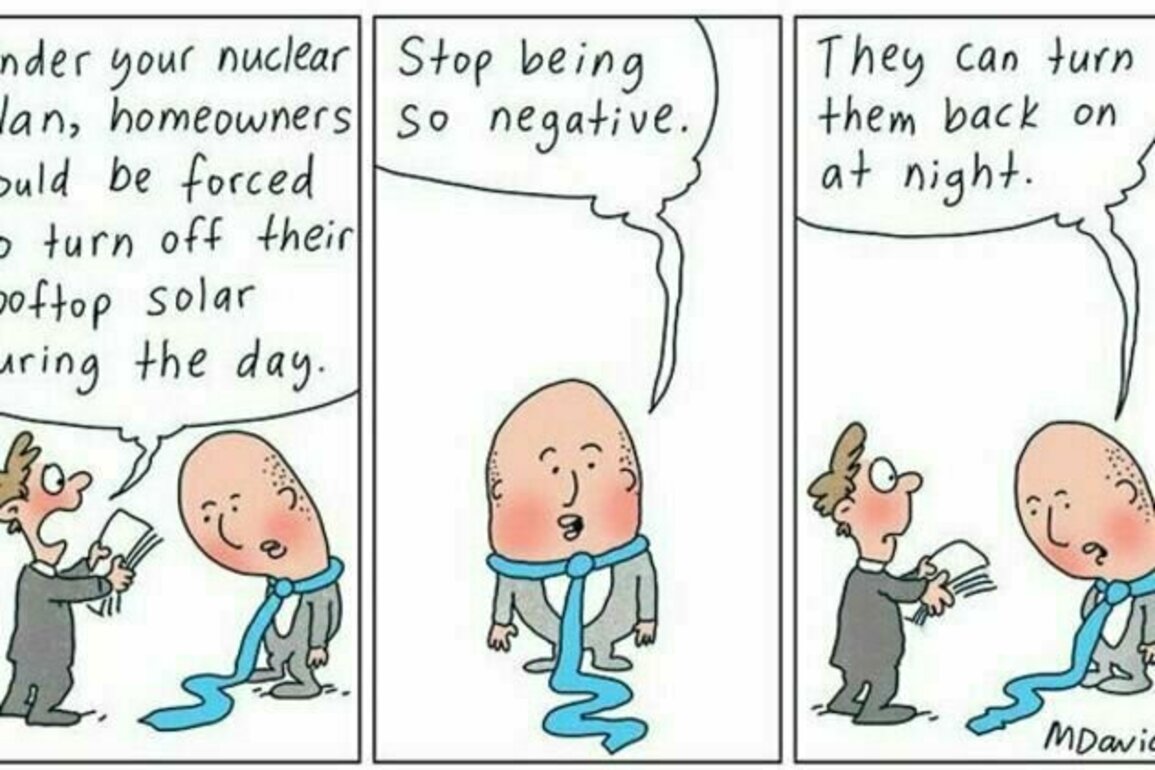
The Coalition has given no shortage of statements, headlines and talking points, but few answers to key questions regarding its nuclear policy, writesDave Sweeney.
POLITICAL DEBATES about nuclear and uranium are different from any other energy, mining and defence debates.
Nuclear is an energy source with unique risks and costs.
Any proposal to introduce nuclear power to Australia as the Liberal and National parties are presently advocating demands extra scrutiny and additional explanation from its proponents.
But thats not what we have been getting. In the eight months since Opposition LeaderPeter Duttoncommitted to nuclear power, key questions about its impact and implications remain unanswered.
Dutton's nuclear disaster: Cheap lies and a $20 billion deficitThe Coalition's nuclear policy announcement comes with a massive price tag but is also built on disinformation.
Other experts are filling the gaps.
Recently, theClimate Change Authority warnedthe Coalitions nuclear policy would add huge amounts of extra climate pollution to the atmosphere and make it virtually impossible for Australia to reach net zero by 2050.
And the interim report released last week by aParliamentary Committeeinquiring into nuclear energy found like so many inquiries before it has found that nuclear energy is not right for Australia.
Commentsfrom committee member and MP for KooyongMonique Ryanhit the nail on the head:
Researchers at ANU have raised the alarm over the potential impact the Coalitions nuclear push would have onAustralias water resources. Nuclear plants are very thirsty pieces of kit. An analysis last decade by the pro-nuclearInternational Atomic Energy Agencyfound nuclear plants use between 20-83 per cent more water than coal.
In our dry nation, water matters. If nuclear plants are not kept constantly cool, they rapidly get hot. And when that happens, things can go very wrong, very quickly.
As seen atFukushima. The approaching 11 March anniversary of this meltdown and its continuing economic, human and environmental legacy is a reminder of the ever-present risks of nuclear technology.
Memo to Dutton: Fukushima's lessons must be learned, not forgottenIt is 13 years since the world held our breath, crossed our fingers and learned of a place called Fukushima, which Peter Dutton and the Coalition seem to have forgotten, writes Dave Sweeney.
Australias insurance sector is clear that its policies do not cover nuclear accidents.
Shadow Climate and Energy spokespersonTed OBrienmight think nuclear is as safe as houses, but that view is not shared by Australian insurance providers.
If something atomic goes wrong, you and your home are on your own.
The insurers wont touch it. And when the issue was raised with Peter Dutton, hedidnt want to talk about it.
U.S. PresidentDonald Trumps new energy secretary,Chris Wright, a fracking executive who is openly hostile to climate action and moves towards net zero, has urged Australia to dig and enrich more uranium and embrace nuclear power.
While Australia can certainly learn from the USA when it comes to nuclear, we would be wise to look to real experience, not the urging of nuclear enthusiasts.
The history of nuclear energy in the USA is a story of timetable and cost blowouts. The USAs most recently constructed nuclear power plant,Vogtle 3, was costed at $US13 billion (AU$20.8 billion) in 2005 but blew out to $US34 billion (AU$54.3 billion) by the time it opened 18 years later in 2023.
The lesson for Australia from the nuclear industry in the USA is dont follow it; avoid it.
Former Miss America and nuclear industry promoterGrace Stankewas in Australia recently. Her national tour, facilitated byDick Smith, was an explicit attempt to redress the big gender divide on nuclear.
Nuclear advocates: Splitting atoms and spinning agendasFormer Miss America and nuclear energy activist Grace Stanke's Melbourne visit saw a pro-nuclear panel push persuasion over debate.
Australianwomen are sceptical about nuclear. They want to hear less industry spin and more about where the water would come from, where the waste would go and what would happen if something unplanned or bad happened.
Other unanswered questions are lining up like planes over Sydney.
What would be the impact on employment and output from Australias rapidly growing renewable energy sector? What would fill the electricity shortfall between the certain closure of coal and the uncertain start of nuclear? Would taxpayers bear the increased cost of nuclear in our tax bills, our power bills, or both? Who would operate and regulate the Coalitions nuclear plants?
And there are many more unknowns.
From the Coalition, theres been no shortage of statements, headlines and talking points, but few answers to those key questions that are bubbling in the community and troubling Coalition backbenchers and candidates.
Ted OBrien says the key to overcoming public resistance to nuclear energy is to becompletely open and transparentabout the Coalitions policy intentions.
The Coalitions policy intention is clear: to advance nuclear power in Australia.
What is patently unclear is the detail about how this would be done and what it would mean for Australias energy market, our environment, our economy and our health.
These are questions all Australians have a right to know and the parties putting themselves up as the alternative government have an obligation to answer.
Dave Sweeneyis theAustralian Conservation Foundation'snuclear-free campaigner and was a founding member ofICAN. You can follow him@nukedavesweeney.
Related Articles
- Duttons citizenship beat-up
- EDITORIAL: Duttons citizenship beat-up
- Big policy ideas that pass the pub test
- CARTOONS: Peter plans to pick apart public service
- 85 reasons why Peter Dutton is unfit to be PM ... and counting