

Trumps new tariffs force Australia to choose between U.S. security and Chinese trade, writesImran Khalid.
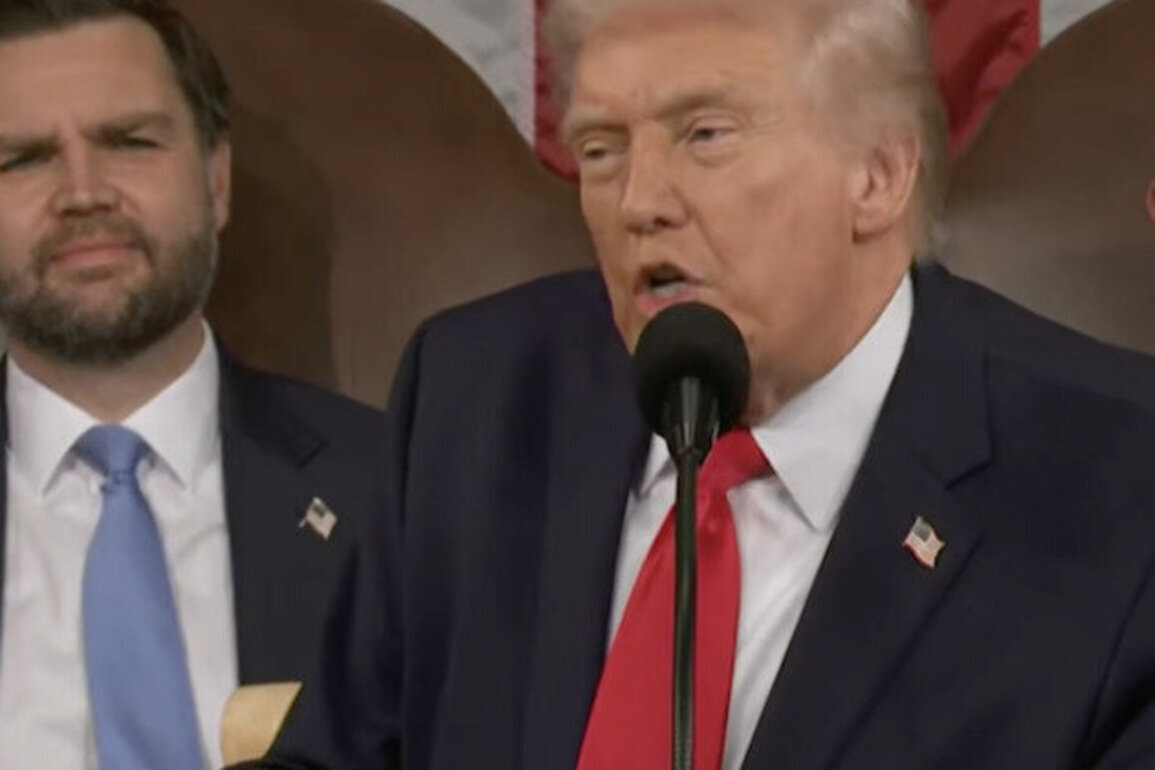
ON FEBRUARY 20, the U.S. Supreme Court effectivelyhandedU.S. President Donald Trump a blank check for protectionism, invalidating previous judicial and legislative curbs on his executive trade authority.
The reality has hardened: a 15 per cent universal baselinetariffinvoked under the expansive Section 122 of the Trade Act of 1974is set to takeeffecton February 24. This is not a targeted trade policy. It is a full-scale economic siege. While the administration has offered a temporary reprieve for critical minerals a pragmatic nod to the existential American need for Australianlithiumthe broader 10per centlevy on Canberras otherexportssignals a fundamental truth. In the America First 2.0 era, even the most storied Forever Partnership carries a steep price tag.
What Trump's oil tariff threats mean for AustraliaDonald Trumps tariffs on countries that continue to import Russian oil have raised fresh concerns among U.S. allies, including Australia.
We are witnessing a world reverting to the raw mercantilism of the 19th century. Other regional powers have already begun to read the room with cold-eyed realism. India has reportedly committed to astaggering$500 billion inU.S. energy and technology purchases to stave off even more punitive duties, a move thatsecuresthem a preferential ratein exchange for halting Russian oil imports. This is transactional diplomacy in its purest form. The rules-based order is not just under strain. It is being replaced by a series of high-stakes, bilateral shakedowns where leverage is the only currency that matters.
While Washington builds these trade walls, Beijing is busy building the physical infrastructure of the futures global power grid. We are witnessing the birth of what energyanalystscall the Electrostate.In 2025 alone, China installed a record-breaking 500 gigawatts of solar and windcapacity. By controlling 80 per cent of the worlds solarmodulesand the lions share of critical mineral processing, China is attempting to do with electrons and lithium-ion batteries what Saudi Arabia once did with crude oil.
Beijings strategy is both elegant and assertive. It uses its Global Development Initiative to hookemergingeconomies in South Asia and Africa onto Chinese-standard green grids and digital ecosystems. From the port of Karachi to the terminals of Jakarta, the regional landscape is being reshaped. Even as nations express alarm over Chinese maritimeassertivenessin the South China Sea, they find themselves economically tethered to Chinese batteries and AI-driven logistics. Beijing is betting that in the 21st century, the country that provides the power will eventually wield the political power as well.
Australia sits uniquely at this intersection. It is the worlds quarry for the green revolution, yet it remains the primary security partner of the very power trying to slow that revolutions Chinese-led momentum. The developments of early February highlight this tension. At the Critical Minerals MinisterialWashington, Vice President JD Vance spoke of a trade bloc with price floors designed to shut China out of the supply chain. This aligns neatly with AUKUS Pillar II,movingAustralia deeper into the high-tech embrace of the U.S. and UK.
But there is a significant catch. Australias prosperity still flows through the contested waters toward Chinese ports, which swallowed $120 billion in Australianexportslast year. As the Commonwealth Banks Februaryreportwarns, a full-scale U.S.-led decoupling could crater demand for Australian iron ore. Canberra is being asked to choose between its security guarantor and its primary customer at a time when the guarantor is taxing its goods, and the customer is monopolising the technology of the next century.
Tough economic times sort out the successful global tradersAs the world deals with the turmoil of Trumps erratic tariffs, the latest data shows Australia is among the winners on exports.
To tackle this situation, Australia must pursue a Strategy of Autonomy. This requires a move toward what might be called Strategic Autonomy with a Western Heart. First, Canberra must embrace the Electrostate reality. Australia cannot afford to be merely a spectator in the green transition. It must use its massivereservesof lithium andrare earthsnot just as an export commodity, but as a diplomatic lever. Security cooperation through AUKUS can be leveraged for tangible economic exemptions.
Second, Australia must look to the Middle Powers. As the superpowers diverge, a Competitiveness Alliance is forming between Japan, the EU, and increasingly, India. Pakistan, too, is seeking a role in this shifting landscape, as seen in the finalisation of a new bilateral investmenttreatybetween Islamabad and Canberra earlier this year. Australia should lead a coalition of nations that still believe in open supply chains, even if the two superpowers no longer do. Finally, domestic value-addition is no longer an economic luxury. It is a national security requirement. Exporting raw dirt and importing finished batteries is a 20th-century model that invites vulnerability. As Resources Minister Madeleine King hasnoted, such measures are not helpful for global stability, but they are the reality we face.
The era of passive prosperity for Australia is over. The global economy is no longer a neutral playing field. It is a battlefield of geoeconomics. Australia has the resources the world craves and the alliances the world envies. But in this new age, those assets are only as good as the courage to use them independently. The crossroads is here. It is time for Canberra to choose a path that leads neither to isolation nor to vassalage, but to a new kind of Australian resilience.
Imran Khalidis a geostrategic analyst and columnist on international affairs. His work has been widely published by prestigious international news organisations.